
Main Courses
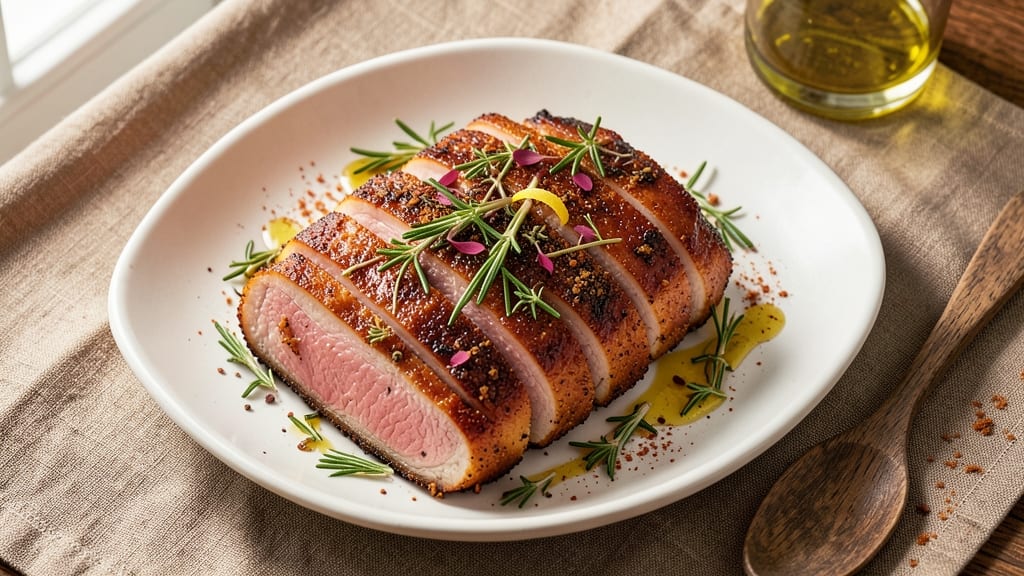
This air fryer pork loin recipe delivers the perfect balance of crispy bark and juicy center without a single drop of oil.
After years of perfecting pork at Atlanta The Smoky Pig, I've adapted this technique for home cooks—where the air fryer's precision heat creates that coveted crust while keeping the interior tender. The secret lies in a simple seasoning blend and careful temperature control that transforms tough pork into melt-in-your-mouth perfection.
What sets this method apart is the two-stage cooking process: starting at a lower temperature to render fat, then cranking up the heat for that signature crisp. No need for fancy equipment—just a quality pork loin, basic pantry spices, and 30 minutes of hands-off time.
The result? A restaurant-quality cut that's foolproof for weeknight dinners or special occasions. My heritage pigs from the farm always deliver the best texture, but any well-sourced pork loin will work beautifully.
By the time you're done, you'll have golden, crackling edges with a pink center that's impossibly tender—no dryness, no guessing. The air fryer's even heat distribution ensures perfect results every time, and the minimal prep means you'll spend more time enjoying the meal than standing at the stove.
This is the kind of pork loin that makes people ask for seconds before they even finish their first plate.
The beauty of this recipe extends beyond the main course. Pair it with roasted sweet potatoes, a crisp apple slaw, or even a simple green salad to round out the meal.
The crispy edges hold up beautifully for leftovers too—just reheat gently to maintain that perfect texture. Let's get cooking with this game-changing pork loin technique.
Ingredients for airfryer pork loin
Game-changing ingredients for restaurant-quality pork loin—crispy outside, juicy inside, all in your air fryer.
| Ingredient | Amount | Notes |
|---|---|---|
| Pork Loin 🐖 | 1 ½ lb | Center-cut, 1.5-inch thick |
| Extra-Virgin Olive Oil 🫒 | 1 tbsp | For light coating |
| Kosher Salt 🧂 | 1 ½ tsp | Diamond Crystal preferred |
| Freshly Ground Black Pepper 🌶️ | 1 tsp | Coarse grind for texture |
| Garlic Powder 🧄 | ½ tsp | Freshly ground preferred |
| Smoked Paprika 🌶️ | ½ tsp | For subtle smokiness |
| Onion Powder 🧅 | ½ tsp | Enhances depth of flavor |
| Mustard Powder 🍯 | ¼ tsp | Adds subtle tang |
| Fresh Thyme Leaves 🌿 | ¼ tsp | Or 1/4 tsp dried thyme |
| Cornstarch 🌾 | 1 tbsp | For crispy exterior |
| Apple Cider Vinegar 🍎 | 1 tsp | Brightens flavor profile |
The pork loin makes all the difference here. Heritage pigs from the farm deliver the best texture, but any quality center-cut loin (1.5 inches thick) will work beautifully. Look for good marbling—it renders fat that creates that coveted crispy bark. I always grab mine from Whole Foods or my local butcher, but the regular supermarket cut works too. The thickness matters: thinner cuts dry out, while thicker ones stay juicy. For the best results, let the pork sit at room temperature for 30 minutes before cooking—this ensures even cooking throughout.
No extra-virgin olive oil? Avocado oil or grapeseed oil works just as well. Diamond Crystal kosher salt is my go-to because it dissolves easily, but any kosher salt will do (just adjust slightly if using table salt). Fresh thyme is ideal, but dried thyme at one-fourth the amount gets you close. Want more smokiness? Swap smoked paprika for regular paprika—just add an extra pinch. The cornstarch is non-negotiable for that crispy exterior, but if you're out, arrowroot powder works too. And if you don't have apple cider vinegar, a splash of lemon juice does the trick.
This pork loin keeps beautifully—3-4 days in the fridge, 3 months frozen. For leftovers, reheat gently in the air fryer at 300°F for 5-7 minutes to maintain that crispy texture. I always make a double batch because it reheats so well for sandwiches or salads. Store cooked pork in an airtight container with a paper towel to absorb any moisture. The crispy edges hold up surprisingly well, so don't hesitate to save leftovers for another meal—just reheat carefully to avoid drying out.
Why You'll Love This Recipe
- No-Fuss Prep: I swear by this—just pat the pork dry, drizzle with olive oil, sprinkle salt and pepper, and toss in the air fryer. Zero chopping, zero fuss, and honestly? That’s my kind of dinner.
- Crispy-Garlic Magic: The garlic powder clings to the outside like a flavor hug, while the olive oil keeps the inside juicy. First bite? That’s the moment your taste buds throw a party—no extra sauce needed.
- Lunchbox Hero: Between us, this is my go-to for meal prep. Slice it up, pack it with some greens, and boom—you’ve got a lunch that’s actually exciting. My kids fight over it, and that’s saying something.
- Budget-Friendly Feast: Pork loin stretches further than you’d think, and the ingredients? Basic pantry staples. I’ve fed four people for under $15, and they left the table happy. Leftovers? Even better cold the next day.
Step-by-step instructions for airfryer pork loin
Here's how to transform a simple pork loin into a showstopping centerpiece with a perfect balance of juicy meat and crispy bark.
Prep the Pork Loin for Maximum Flavor
Pat the 1.5 lb pork loin completely dry with paper towels—this is non-negotiable for crispy bark. I like to press firmly, even getting into the crevices, to remove every bit of moisture. The drier the surface, the better the cornstarch will adhere and crisp up.
In a small bowl, whisk together the 1.5 tsp kosher salt, 1 tsp freshly ground black pepper, 0.5 tsp garlic powder, 0.5 tsp smoked paprika, 0.5 tsp onion powder, 0.25 tsp mustard powder, and 0.25 tsp fresh thyme leaves. Rub this generously over all sides of the pork, pressing the spices into the meat so they stick. The mustard powder adds a subtle tang that cuts through the richness, while the thyme brings an earthy depth that pairs perfectly with pork.
Let the seasoned pork rest at room temperature for 15 minutes while you preheat the air fryer. This step ensures even cooking—cold meat can create uneven doneness. I always set a timer so I don't forget this crucial step, especially when I get excited to start cooking.
Create the Crispy Cornstarch Coating
In another small bowl, mix the 1 tbsp cornstarch with 1 tsp apple cider vinegar until fully combined. The vinegar brightens the flavor while helping the cornstarch stick to the meat. Drizzle the 1 tbsp extra-virgin olive oil over the pork and rub it evenly all over, including the cut edges.
Now, here's the secret: roll the pork in the cornstarch mixture, pressing gently to ensure an even coating. I use my hands for this—it gives me better control than a bowl. The cornstarch will look like too much at first, but trust me, it's exactly what we need for that perfect air-crisped bark. Let it sit for 5 minutes while the air fryer preheats to 375°F—this gives the coating time to fully adhere.
Air-Fry to Juicy Perfection
Place the pork loin in the air fryer basket, standing it upright if possible—this helps the air circulate more evenly around all sides. Cook at 375°F for 12 minutes, then flip the pork and continue cooking for another 12-14 minutes until the internal temperature reaches 145°F (measured with a meat thermometer in the thickest part).
You'll know it's ready when the exterior has a deep golden-brown color and the cornstarch coating is crispy to the touch. The pork should release from the cornstarch coating easily when you lift it with tongs. If it's browning too quickly, tent it loosely with aluminum foil for the last 5 minutes to prevent over-browning while it finishes cooking.
Rest and Slice for Maximum Juiciness
Transfer the pork to a cutting board and let it rest for 10 minutes before slicing. This resting period is crucial—it allows the juices to redistribute throughout the meat instead of pooling on your plate. I know it's tempting to slice immediately, but trust me, those extra minutes make all the difference in juiciness.
Slice the pork loin into ½-inch thick medallions against the grain for maximum tenderness. Each slice should have a beautiful crispy exterior with a juicy, pink center. Serve immediately with your favorite sides—roasted vegetables or a fresh salad complement this dish perfectly. The apple cider vinegar in the cornstarch mixture really shines here, giving the pork a bright, well-rounded flavor that keeps every bite interesting.
Pro Tips For Making Airfryer Pork Loin
- Pat the pork dry: Airfrying needs moisture to evaporate fast for a crisp crust—so grab paper towels and wipe down the loin until it’s bone-dry. I used to skip this, and my pork always came out sad and greasy instead of golden. Even if it feels weird, trust the process.
- Use two temps: 400°F then 375°F: Start hot (400°F) for the first 10 minutes to sear the outside, then drop to 375°F to cook through evenly. After burning my first batch at 400°F the whole time, I learned this two-step method keeps the center juicy while the crust stays perfect.
- Salt before seasoning: Sprinkle kosher salt on the pork first, let it sit 10 minutes, then add pepper and garlic powder. This ensures the salt penetrates deeper—no more dry edges or bland flavor. (Yes, even if you’re impatient like me.)
- Check temp at 145°F: Use a meat thermometer—pork loin is done at 145°F internal temp, not by time. I’ve pulled it out early thinking it was safe, only to have it turn rubbery later. A quick probe saves seconds of overcooking.
Troubleshooting this recipe
Uneven Cooking
If your pork loin emerges with some areas undercooked while others are overdone, the issue is likely airflow obstruction. Pork loins often have uneven surfaces, so I recommend trimming excess fat before seasoning—this helps the cornstarch adhere evenly and prevents hot spots.
Also, rotate the pork halfway through cooking (after 12 minutes) to ensure all sides get equal exposure to the heat. My Ninja Foodi 10-in-1 air fryer has excellent airflow, but even budget models like the Cosori Premium work well if you follow this tip. 🌡️
Dry or Tough Meat
When pork loin turns out dry, it's almost always from overcooking or skipping the rest time. The key is hitting 145°F internal temperature—no higher! Use a meat thermometer (I swear by the Thermoworks Smoke) to check the thickest part.
If you're unsure, start checking at 10 minutes before the estimated time. Also, never skip the 10-minute rest—this is when the juices redistribute. Pro tip: If your pork feels firm when you press it, it's overdone. 💪
Soggy Crust
A soggy crust means the cornstarch didn't crisp properly, usually from too much moisture or insufficient heat. First, pat the pork completely dry before seasoning—no shortcuts here. Second, preheat your air fryer thoroughly (5 minutes at 375°F) before adding the pork.
If you're using a smaller air fryer (like the Dash Deluxe), reduce the batch size to 1 lb max for better airflow. For extra insurance, reapply cornstarch after the initial coating dries slightly (after 5 minutes). ✨
Undercooked Center
An undercooked center happens when the external temperature exceeds the internal heat too quickly. Lower the initial temp to 350°F for the first 8 minutes, then increase to 375°F for the remaining time. This gradual approach prevents the outside from sealing too soon.
For thicker cuts (over 1.75 inches), consider starting at 325°F until the internal temp reaches 130°F, then cranking up the heat. A wire rack in the air fryer basket also helps with even cooking. 🔥
Burnt Exterior
Burnt edges mean your air fryer is too hot or the pork is too close to the heating element. First, reduce temperature by 25°F (to 350°F) if browning happens quickly. Second, leave space between the pork and basket walls—don't crowd it.
For stubborn browning, tent loosely with foil for the last 5 minutes. My Breville Smart Oven Air Fryer handles high temps better, but even basic models like the Instant Vortex Plus work if you monitor closely. 💡
Sticky Cornstarch
If the cornstarch coating sticks stubbornly to the pork, it's likely from excess moisture or not enough oil. Before rolling in cornstarch, dry the pork thoroughly and coat lightly with oil (I use avocado oil for high smoke point).
For stubborn adhesion, chill the pork for 15 minutes after coating—this firms up the fat slightly and helps the cornstarch set. If it still sticks, rinse the pork under cold water before seasoning to remove any surface moisture. 🌾
Nutrition facts
Frequently asked questions
Can I use pork loin with bone for this air fryer recipe?
Bone-in pork loin works but requires adjustments. The bone conducts heat differently, so reduce cooking time by 2-3 minutes and check internal temperature at 135°F (it'll rise to 145°F while resting). Trim excess fat first—it can create hot spots and uneven crispiness. For best results, use a 1.25-inch thick bone-in cut and monitor closely.
How do I adjust this recipe for thicker pork loin cuts?
For cuts over 1.75 inches thick, start at 325°F for 8 minutes to render fat, then increase to 375°F until reaching 145°F internal temp. Thicker cuts need 18-22 minutes total. Use a wire rack in the air fryer basket to prevent steam buildup. For extra insurance, tent loosely with foil after 12 minutes to avoid over-browning.
What's the best way to reheat leftovers?
Reheat sliced pork in the air fryer at 300°F for 5-7 minutes to maintain crispiness. For whole pieces, wrap in foil and heat at 325°F for 8-10 minutes. Never microwave—it turns the crust soggy. Pro tip: Store cooked pork in an airtight container with a paper towel to absorb moisture. Leftovers keep 3-4 days in the fridge or 3 months frozen.
Can I substitute cornstarch for another crispy coating?
Yes! Try 1 tbsp panko breadcrumbs mixed with ½ tsp garlic powder for a heartier texture, or 1 tbsp almond flour for gluten-free. For extra crispiness, brush with egg wash (1 egg + 1 tbsp water) before adding coating. Just remember: cornstarch gives the lightest, crispiest result. Any substitute should be completely dry before applying.
Why does my air fryer pork loin turn out dry?
Dryness usually means overcooking or skipping the rest time. Always use a meat thermometer—145°F internal temp is perfect. If you're unsure, start checking 5 minutes early. Also, never skip the 10-minute rest—this lets juices redistribute. For extra moisture, brush the pork with ½ tbsp olive oil before seasoning.