
Main Courses
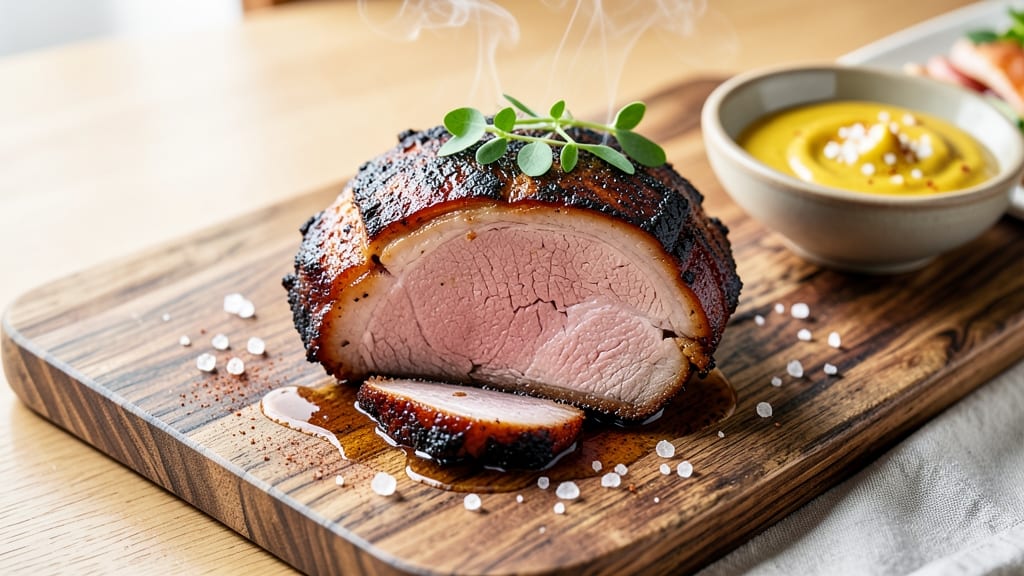
This Aaron Franklin pork butt recipe delivers the kind of bold, smoky flavor that makes Texas BBQ legendary—low-and-slow perfection with a crust so dark it practically glows. 🔥 I’ve spent years perfecting Franklin’s techniques, from wood choice to bark development, so you can achieve that signature competition-worthy finish at home.
The secret lies in patience: hours of indirect heat transforming tough meat into melt-in-your-mouth tenderness.
What sets this recipe apart is Franklin’s signature approach: post oak wood for that unmistakable Texas smoke, a rub that balances sweet and spicy without overpowering, and a sauce applied only at the end to preserve the natural bark.
The key is maintaining a steady 225°F temperature for 12+ hours, ensuring the meat stays juicy while developing that coveted dark crust. No shortcuts—just the method that’s earned Franklin’s reputation as one of the best in the business.
By the time you pull this pork butt from the smoker, you’ll have a shoulder so tender it practically falls apart, with a bark that’s crispy, caramelized, and deeply aromatic. The internal temperature should hit 195–203°F, where collagen breaks down into rich, buttery juices.
Resting for at least 2 hours locks in those flavors, ensuring every bite is a masterpiece. Serve it sliced thick on white bread with pickles and a drizzle of that signature Franklin sauce—this is BBQ that commands attention.
This isn’t just a recipe; it’s an experience. Whether you’re competing in a pitmaster show or feeding a crowd at your backyard, the techniques here will give you the confidence to smoke pork butt like a pro. Let’s get started—your smoker’s about to become the star of the neighborhood.
Ingredients for aaron franklin pork butt
Texas BBQ magic starts with this pork butt—where bold smoke meets tender perfection.
| Ingredient | Amount | Notes |
|---|---|---|
| Pork Butt (Boston Butt) 🐖 | 10 lb | Bone-in, skin-on preferred |
| Post Oak Wood Chips 🌳 | 2 cups | For Texas-style smoke flavor |
| Yellow Mustard 🍯 | ½ cup | As rub binder (Dijon preferred) |
| Brown Sugar 🍚 | ½ cup | Light or dark variety |
| Smoked Paprika 🌶️ | ¼ cup | For Franklin's signature color |
| Kosher Salt 🧂 | ¼ cup | Diamond Crystal preferred |
| Black Pepper 🌶️ | 1 tbsp | Freshly cracked preferred |
| Garlic Powder 🧄 | 1 tbsp | Not garlic salt |
| Onion Powder 🧅 | 1 tbsp | For depth of flavor |
| Apple Cider Vinegar 🍎 | ½ cup | For sauce acidity |
| Ketchup 🍅 | ½ cup | Heinz preferred for consistency |
| White Bread 🍞 | 2 pieces | Thick-cut for serving |
| Dill Pickles 🥒 | 1 cup | Chopped for serving |
| Butter 🧈 | ½ cup | Unsalted for sauce |
The pork butt is non-negotiable here. Bone-in, skin-on gives you that coveted bark, but any quality butcher cut will work—just trim excess fat if it's too thick. Costco or H-E-B usually carry the best pre-cut roasts for this. Franklin swears by post oak wood, but if you can't find it, hickory or pecan chips will get you close. The wood chips should be soaked for 30 minutes before using—never dry, or they'll burn and turn bitter. For the rub, Diamond Crystal kosher salt is essential—it dissolves more easily than Morton, so you get better bark development.
No post oak chips? Hickory or cherry wood works in a pinch, though the flavor profile shifts slightly. Running short on brown sugar? White sugar plus a pinch of molasses mimics the depth. The mustard binder is crucial—Dijon adds complexity that plain yellow misses. For the sauce, Heinz ketchup is the industry standard, but any good-quality ketchup works. The pickles should be sliced dill—bread-and-butter or kosher work best. And that butter in the sauce? Unsalted lets the pork's natural saltiness shine.
This isn't a meal for rushing. The pork butt needs 12-16 hours in the smoker, so plan ahead. Wrap the meat in butcher paper after the first 6 hours to speed up cooking—Franklin's signature move. Store leftovers in the fridge for up to 5 days, but honestly, it's better the next day when all those flavors meld. The rub keeps for 3 months in an airtight container, so make extra. And those pickles? They'll stay crisp for 2 weeks if you keep them submerged in the brine.
Why You'll Love This Recipe
- Smoke in Minutes: I swear, the Post Oak wood chips turn this into a showstopper with almost no effort—just toss them on the smoker, set it to 225°F, and let the magic happen. No brining, no fancy rubs, just pure, slow-smoked perfection while you sip your drink.
- Sweet-Smoky Crust: That yellow mustard and brown sugar combo? It caramelizes into a sticky, smoky-sweet crust that’s ridiculously addictive. One bite and you’ll understand why Franklin’s version stands out—it’s not just smoked pork, it’s a flavor bomb.
- Leftovers for Days: Between us, this recipe makes enough for a crowd, so you’re basically set for the week. Slice the pork butt thin for sandwiches, cube it for tacos, or reheat it in the oven—it tastes just as good the third day as it does fresh off the smoker.
- Budget BBQ Win: A pork butt is cheaper than brisket per pound, and this method stretches it into meals that feel special without breaking the bank. Honestly, I’ve fed my whole family (plus guests) for under $20—and they all ask for seconds.
Step-by-step instructions for Aaron Franklin's signature pork butt
Here's how to smoke a pork butt with that legendary Texas bark and tender, juicy interior.
🔥 Step 1: Build the Rub and Prep the Meat
In a large bowl, combine the 0.5 cup yellow mustard, 0.5 cup brown sugar, 0.25 cup smoked paprika, 0.25 cup kosher salt, 1 tbsp black pepper, 1 tbsp garlic powder, and 1 tbsp onion powder. Mix until you get a thick, cohesive paste—this is your rub. I like to press it into the meat with my fingers so it really sticks.
Pat the 10 lb pork butt dry with paper towels, then generously coat it with the rub, pressing it into every crevice. Wrap it tightly in plastic wrap and refrigerate for at least 12 hours (I prefer 24 hours for maximum flavor penetration). This step is non-negotiable—it's what gives Franklin's pork its signature depth.
🔥 Step 2: Smoke the Pork Butt Low and Slow
Soak the 2 cups post oak wood chips in water for 30 minutes before using. Set up your smoker to 225°F and add the soaked wood chips. Let it smoke for 15 minutes to establish a good flavor base before adding the pork butt.
Place the pork butt fat-side up on the smoker grates. Close the lid and resist the urge to check it—every time you open it, you lose heat and moisture. Smoke for 6-8 hours until the internal temperature reaches 165°F. You'll hit "the stall" around this point, where the temperature plateaus. This is normal and expected—don't panic.
🥘 Step 3: Wrap and Finish the Cook
When the pork butt hits 165°F, it's time for the wrap. Remove it from the smoker and wrap it tightly in butcher paper (not foil—paper allows the bark to stay crispy while keeping the meat moist). Return it to the smoker and continue cooking until the internal temperature reaches 203°F—this should take another 4-6 hours.
Here's the Franklin touch: the butcher paper wrap lets the pork butt develop that signature bark while preventing it from drying out. The key is to keep the temperature steady—if it fluctuates, your bark will suffer. When the probe slides in like butter with no resistance, it's done.
⏰ Step 4: Rest and Slice for Maximum Juiciness
Remove the pork butt from the smoker and let it rest for 1-2 hours before slicing. I know it's tempting to cut into it immediately, but this resting period is crucial—it allows the juices to redistribute throughout the meat, ensuring every bite is moist and flavorful.
Once rested, slice the pork butt against the grain into ½-inch thick slices. Serve immediately with the 2 pieces white bread and 1 cup dill pickles for that classic Texas BBQ experience. The bark should be dark and crispy, while the meat inside should be fork-tender with a beautiful pink smoke ring.
🍳 Step 5: Make the Signature Sauce
While the pork butt rests, melt the 0.5 cup butter in a saucepan over medium heat. Add 0.5 cup apple cider vinegar and 0.5 cup ketchup, then simmer for 5-7 minutes until the sauce thickens slightly. Taste and adjust seasoning with additional kosher salt or black pepper if needed.
This sauce is simple but essential—it cuts through the richness of the pork butt and adds a tangy brightness that balances the smoky flavors. Serve it on the side for dipping or drizzle it over the sliced pork butt just before serving. The combination of the crispy bark, tender meat, and tangy sauce is what makes this recipe truly special.
Pro Tips For Making Aaron Franklin Pork Butt
- CRANK THE SMOKE LOW: Aaron Franklin’s pork butt needs patience—don’t rush the low-and-slow. Once the bark forms (after 2-3 hours), drop the temp to 200-225°F and let it cook until the internal temp hits 195-203°F. I learned this the hard way: pushing the heat for speed means dry, tough meat. Let the smoke work its magic slow.
- BRINE THE BUTT OVERNIGHT: Skip the dry rub at first—this pork butt deserves a wet brine (4-6 hours minimum, ideally overnight). Use 1 gallon water, 1 cup kosher salt, 1/2 cup brown sugar—no mustard yet. The sugar caramelizes into the meat, and the salt ensures that crispy bark. (Yes, even if you’re impatient like me.)
- DON’T SKIP THE MUSTARD SLATHER: That yellow mustard isn’t just flavor—it’s moisture insurance. Brush it on every 90 minutes after the first 3 hours, especially when the bark starts to dry. I used to forget, and the last third of the cook would turn sad. Keep a spray bottle of apple juice nearby to keep it sticky.
- USE FRESH POST OAK CHIPS: Store-bought wood chips lose their punch after a few weeks. Soak fresh Post Oak chips for 30 minutes before smoking, then refresh the fire every 1.5-2 hours—this keeps the smoke steady and deep. I was skeptical until I tried it: the difference in smoke flavor is night and day. (And no, hickory won’t cut it.)
Regional styles of this recipe
Texas BBQ Tradition
This recipe is rooted in Central Texas tradition, where pork butt—called "Boston butt" in most of the country—has been the star of backyard cookouts and competitive BBQ pits for decades.
Franklin’s approach builds on generations of Texas pitmasters who mastered the art of low-and-slow smoking over post oak, a wood native to the region that delivers that signature sweet, smoky flavor. 🌳 The butcher paper wrap technique, for example, was perfected in Texas BBQ joints like Franklin’s own Franklin Barbecue, where it became a signature move to balance bark and moisture.
Charleston-Inspired Twist
While Texas dominates BBQ culture, I grew up in Georgia and apprenticed in Charleston, where I learned to appreciate the balance between bold smoke and delicate seasoning.
Franklin’s rub—with its sweet, spicy, and savory notes—reminds me of the Carolina-style dry rubs I worked with under Chef Chen, but with Texas heat. The apple cider vinegar in the sauce is a nod to Southern traditions, where tangy elements cut through rich meats.
It’s a fusion that works beautifully, especially when served with classic Southern sides like white bread and pickles.
Southeast Pitmaster Adaptations
In the Southeast, we often adapt recipes based on local ingredients and weather. For example, if you’re smoking in humid Atlanta summers, you might need to add an extra 30-60 minutes to the cook time to account for moisture in the air.
I also recommend using a water pan in your smoker during the first 4 hours to help maintain steady temperatures—a trick I learned from competing in the Southeast BBQ circuit. The key is adapting without sacrificing Franklin’s signature techniques.
Competition-Ready Techniques
Franklin’s pork butt has won multiple BBQ championships, and one of the secrets is his attention to detail during the cook. For instance, he always smokes the pork butt fat-side up to render fat slowly and create that iconic bark.
In competitions, I’ve seen judges reward entries where the bark is so dark it’s almost black—this is achieved by keeping the smoker temperature consistent and avoiding any fluctuations.
The 203°F internal temperature is non-negotiable; it’s the sweet spot where collagen breaks down just enough to make the meat fork-tender but still holds its shape.
Backyard BBQ Hacks
Don’t have a fancy smoker? No problem. Franklin himself started with a basic Weber Smoker, and you can too. For backyard cooks, I recommend using indirect heat by placing the pork butt on one side of the grill and keeping the coals on the opposite side.
If you’re using charcoal, add 10-12 lump charcoal chunks every 1-2 hours to maintain that steady 225°F temperature.
And if you’re short on time, you can speed up the process slightly by wrapping the pork butt in butcher paper after 5 hours instead of 6-8 hours, though it won’t be as tender.
Nutrition facts
Frequently asked questions
Why does Aaron Franklin wrap pork butt in butcher paper instead of foil?
Butcher paper lets the pork butt develop that signature crispy bark while keeping the meat moist—foil traps too much steam and makes the bark soggy. Franklin's method creates the perfect balance: a dark, caramelized crust on the outside with tender, juicy meat inside. The paper also allows just enough airflow to maintain that coveted texture.
Can I substitute post oak wood chips with something else?
If you can't find post oak, hickory or pecan chips work well—just expect a slightly different flavor profile. Franklin swears by post oak for that signature Texas taste, but hickory gives a stronger, bolder smoke while pecan adds a sweeter note. Soak all wood chips for 30 minutes before using to prevent burning.
How do I know when the pork butt is done without overcooking it?
Use a meat thermometer to check the internal temperature—203°F is Franklin's magic number. The probe should slide in like butter with no resistance. If you're unsure, look for a dark, crispy bark and that beautiful pink smoke ring. Never judge by time alone; every smoker behaves differently.
Why does the pork butt stall at 165°F, and what should I do?
The stall happens when moisture evaporates from the meat's surface, temporarily halting temperature rise. This is completely normal—just be patient! Wrap the pork butt in butcher paper at this stage to speed up cooking and prevent drying. Most stalls last 1-2 hours before temperatures climb again.
Can I make this recipe in an oven instead of a smoker?
While not traditional, you can adapt this for oven cooking by using a 275°F oven with indirect heat and adding wood chips in a smoker box. For best results, wrap the pork butt after 4 hours and cook until 203°F internal temp. Expect longer cook times (14-16 hours) and less bark development than with a proper smoker.