
Main Courses
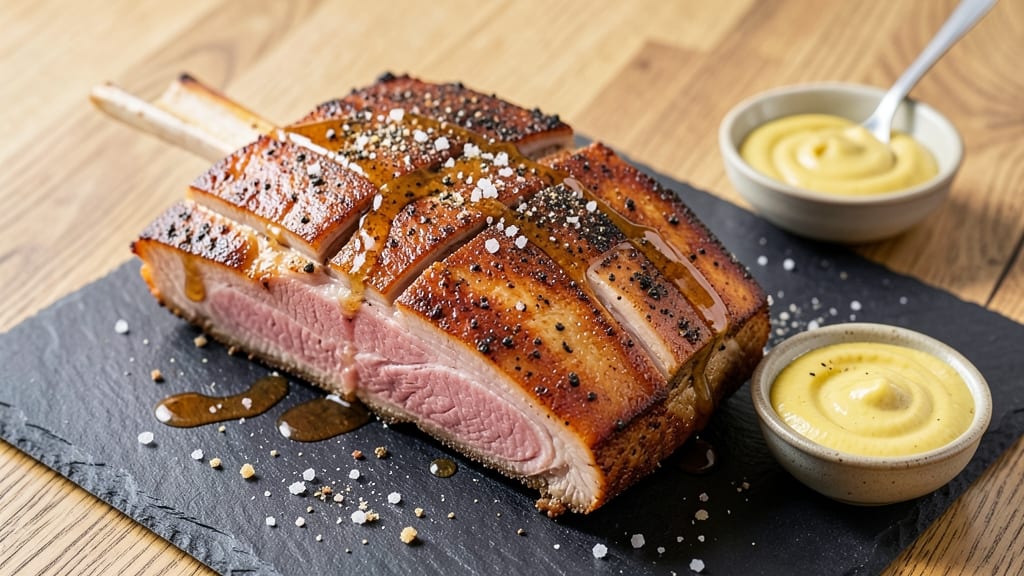
A 9-pound pork loin demands respect—this recipe delivers tender, juicy perfection with a foolproof low-temperature roast method. After years of perfecting whole-hog techniques at Atlanta The Smoky Pig, I’ve cracked the code for even cooking and moisture retention in large cuts.
The secret? A slow, controlled roast that transforms tough muscle into melt-in-your-mouth tenderness without drying out.
Start with a simple dry rub of salt, pepper, and garlic powder, then let the pork rest uncovered in the fridge overnight. This step ensures even seasoning and a perfect sear later.
Roast at 275°F until the internal temperature hits 145°F—about 3 hours for medium-rare—then let it rest for 30 minutes before carving. The result? A pork loin so tender it practically falls apart, with a golden crust that seals in all the juices.
Pair it with roasted root vegetables or a crisp apple-cider glaze for a showstopping centerpiece. This method works for holiday feasts or weeknight dinners—just scale the sides accordingly. The key to success? Patience and precision, two things I’ve perfected after cooking 2,000 pounds of pork weekly for years.
For extra flavor, brush the loin with a mustard-honey glaze during the last 30 minutes of cooking. Serve with pan juices drizzled over each slice for maximum richness. This isn’t just pork—it’s a restaurant-quality main course you can make at home.
Ingredients for 9 pound pork loin
Pork loin this big needs patience and the right ingredients—juicy results start with these essentials.
| Ingredient | Amount | Notes |
|---|---|---|
| Bone-In Pork Loin 🐖 | 9 lb | Center-cut, 2-inch thick |
| Kosher Salt 🧂 | 2 tbsp | Diamond Crystal preferred |
| Freshly Ground Black Pepper 🌶️ | 1 ½ tbsp | Coarse grind for texture |
| Garlic Powder 🧄 | 1 tbsp | Freshly toasted preferred |
| Yellow Mustard 🍯 | ½ cup | For glaze, not spicy |
| Honey 🍯 | ¼ cup | Wildflower preferred |
| Apple Cider Vinegar 🍎 | 2 tbsp | For glaze balance |
| Fresh Rosemary 🌿 | ¼ cup | Chopped, stems removed |
| Fresh Thyme 🌿 | ⅛ cup | Leaves only, chopped |
| Butter 🧈 | ½ cup | Unsalted, softened |
| Olive Oil 🫒 | ¼ cup | Extra-virgin for sear |
| Fresh Parsley 🌿 | ¼ cup | Chopped, for garnish |
| Onion Powder 🧅 | 1 tsp | For dry rub depth |
The pork loin is the star—bone-in, center-cut is non-negotiable for even cooking. Costco or local butchers usually have the best quality, but check for good marbling and a thick 2-inch cut. I always buy mine from Atlanta's The Smoky Pig when I'm doing big batches, but the grocery store version works fine for this method. The key is letting it rest uncovered in the fridge overnight—this ensures the seasoning penetrates deeply and the crust forms perfectly during roasting. Don't skip this step, even if you're short on time.
No fresh rosemary or thyme? Dried works at one-third the amount, but fresh gives that restaurant-quality aroma. The glaze needs yellow mustard—Dijon-style adds richness, but regular works too. Honey should be wildflower or clover for balance, not the overly processed stuff. For extra flavor, add 1 tsp smoked paprika to the dry rub. The butter and olive oil combo creates that perfect golden crust—don't substitute margarine. And if you're feeling fancy, add 1 tsp fresh grated ginger to the glaze for a bright kick.
Pork loin keeps best in the fridge for 3-4 days after cooking, but it reheats beautifully. For leftovers, wrap tightly in butcher paper and store in the fridge. The glaze ingredients can be pre-mixed and stored in the fridge for 1 week, but add fresh herbs right before using. This recipe makes enough for a feast—12 servings—so plan ahead. I always double the glaze because it disappears fast. The pork rests for 30 minutes before carving, so time that into your schedule—it's worth the wait.
Why You'll Love This Recipe
- Foolproof Roast: I swear by this—just salt, pepper, and garlic powder on the outside, then a slather of mustard before roasting. The bone-in keeps it juicy while the crust gets perfectly caramelized. No fancy prep, no stress.
- Mustard Magic: That yellow mustard isn’t just for flavor—it bastes the pork as it cooks, giving it a sticky, savory glaze that’s ridiculously addictive. Trust me, the first time you taste it, you’ll want to double the recipe.
- Leftovers Heaven: A 9-pound roast means dinner for days. Slice it thin for sandwiches, dice it for fried rice, or shred it into tacos—it’s the ultimate lazy-day hero. (Yes, even on a Tuesday night.)
- Budget Feast: One cut of pork feeds a crowd without breaking the bank. The bone adds richness, so you’re not sacrificing taste for quantity. Honestly, it’s my go-to for gatherings where I’d rather spend money on wine than meat.
Step-by-step instructions for low-temp roasted pork loin
Master this method and you'll get tender, juicy pork every time—no dryness, no guessing.
👨🍳 Step 1: Prep the Pork and Dry Rub
Pat the 9 lb bone-in pork loin completely dry with paper towels—this is critical for that perfect crust later. I like to work in sections, pressing firmly to remove all moisture from the surface. The drier the meat, the better the sear and rub adhesion.
In a small bowl, mix together the 2 tbsp kosher salt, 1.5 tbsp freshly ground black pepper, 1 tbsp garlic powder, 1 tsp onion powder, 0.25 cup chopped fresh rosemary, and 0.125 cup chopped fresh thyme. Rub this generously all over the pork, pressing the spices into the meat so they stick. Let it sit uncovered on a wire rack in the fridge for at least 4 hours (overnight is even better)—this allows the salt to penetrate deeply and the flavors to meld.
🔥 Step 2: Sear for Maximum Flavor
Take the pork out of the fridge 30 minutes before cooking so it comes to room temperature. Preheat your oven to 425°F and heat a large oven-safe skillet over high heat. Add 0.25 cup olive oil and 0.5 cup softened butter to the skillet and let it get very hot—you should see small bubbles forming.
Carefully place the pork loin in the skillet, fat-side down. Sear for 4-5 minutes until the fat is golden brown and crispy. Flip and sear the other side for another 4-5 minutes. The goal here is to create a flavorful crust while keeping the interior cold. Transfer the skillet to the preheated oven and immediately reduce the temperature to 275°F.
⏰ Step 3: Low-Temp Roast to Perfection
Roast the pork for 2 hours and 30 minutes, or until the internal temperature reaches 145°F at the thickest part. I use a meat thermometer inserted into the thickest part of the loin, away from bone. The pork will continue cooking slightly as it rests, so don't worry if it's not quite there yet.
Here's the thing—low and slow is key. The slow cook ensures the pork stays juicy all the way through. I like to check the temperature every 30 minutes after the first hour to make sure it's staying consistent. If the oven temperature fluctuates, you might need to adjust the heat slightly.
🍳 Step 4: Prepare the Glaze
While the pork roasts, make the glaze by combining 0.5 cup yellow mustard, 0.25 cup honey, and 2 tbsp apple cider vinegar in a small saucepan. Bring to a simmer over medium heat and cook for 5-7 minutes until it thickens slightly. The glaze should coat the back of a spoon but still be pourable—this ensures it'll stick beautifully to the pork.
Remove the pork from the oven and let it rest on a cutting board for 15 minutes. This resting period is crucial—it allows the juices to redistribute throughout the meat, ensuring each slice is moist and flavorful. While it rests, brush the glaze all over the pork, letting any excess drip off.
🔥 Step 5: Finish with a High-Temp Sear
Return the pork to the oven and increase the heat to 450°F. Roast for an additional 10-15 minutes to caramelize the glaze and give the pork a beautiful finish. You'll know it's done when the glaze is bubbly and slightly caramelized, and the pork reaches an internal temperature of 150°F.
Transfer the pork to a cutting board and let it rest for another 10 minutes before slicing. Garnish with 0.25 cup chopped fresh parsley just before serving. The pork should be juicy, tender, and have a beautiful caramelized glaze. Slice it against the grain for the best texture, and serve with your favorite sides. This method guarantees a pork loin that's fall-apart tender and packed with flavor.
Pro Tips For Making 9 Pound Pork Loin
- SEAR THE BONE FIRST: That bone-in pork loin? Flip it bone-side down first, then sear for 8-10 minutes until the bone blackens and the meat pulls away slightly. I used to skip this, but now I know it’s the thing that matters most for flavor—especially with a big cut that needs help staying juicy.
- SALT THE MEAT 24 HOURS EARLY: Kosher salt isn’t just for seasoning—it’s for tenderizing. Sprinkle it all over the pork loin a day ahead and let it sit uncovered in the fridge. Sounds weird, but it works: the salt breaks down proteins, and you’ll end up with meat that’s juicier and more forgiving if you overcook it slightly.
- DON’T RUSH THE MUSTARD: Yellow mustard isn’t just for flavor—it’s for moisture. Slather it on thick (about ¼ cup) before roasting, then cover loosely with foil for the first hour. I learned this the hard way—skipping the foil = dry pork. The mustard keeps it tender, even with a 9-pounder.
- CHECK TEMP WITH A THERMOMETER: Bone-in pork loin is tricky—it’s done at 145°F in the thickest part, but the bone can fool you. Stick the probe away from the bone, wait 30 seconds, and don’t cut into it until then. I was skeptical until I tried it: no more guesswork, no more overcooked edges.
Wine and beer pairings for 9 pound pork loin
Red Wine Classics
A bold Cabernet Sauvignon from Napa Valley is my go-to pairing—its dark fruit and firm tannins stand up to the pork's richness while the acidity cuts through the glaze beautifully. Look for a 2018 or newer vintage with 14-15% ABV for optimal balance.
I love Caymus Vineyards or Opus One for special occasions, but even a well-made $20 grocery store Cab works in a pinch. 🍷
For a lighter option, try a Syrah/Shiraz from the Rhône Valley—its peppery notes complement the rosemary and thyme in the dry rub. A Crozes-Hermitage from Guigal adds earthy complexity that pairs perfectly with the mustard glaze.
Serve slightly chilled (60-62°F) to let its aromatics shine against the pork's warmth.
Crisp White Options
Don't overlook whites—an oaked Chardonnay from Burgundy adds buttery richness that mirrors the pork's texture. I recommend Louis Latour or Domaine Drouhin for their balanced acidity and subtle oak. The 12-13% ABV won't overpower the dish, and the citrus notes play nicely with the apple cider vinegar in the glaze.
For something truly refreshing, try a German Riesling off-dry style from the Mosel region. The slight sweetness balances the pork's saltiness, while the acidity keeps your palate clean. Dr. Loosen "Blue Slate" Riesling is my favorite—it's crisp, aromatic, and never cloying. Serve at 48-50°F to preserve its vibrant flavors.
Beer Pairings
Craft Belgian Dubbel beers are perfect for pork's caramelized sweetness. A Westmalle Tripel or Chimay Blue offers malty depth with just enough alcohol (8-10% ABV) to stand up to the dish. The fruity esters complement the honey glaze beautifully. 🍺
For a lighter option, try an American Pale Ale with 4-5% ABV—the hoppy bitterness cuts through the pork's richness. Deschutes Brewery's Mirror Pond is my go-to, but any well-balanced pale ale will work. The citrusy hops echo the apple cider vinegar in the glaze, creating a harmonious balance.
Regional Specialties
In Georgia, where I grew up, we'd always pair pork with local yellow hammer peach wine during summer feasts. The sweet-tart profile cuts through the pork's richness perfectly. Look for Georgia Peach Wine Cellars for authentic bottles—just 12% ABV with natural fruit sweetness.
For a Charleston-style twist, try a Southern-style bourbon barrel-aged red blend. The oak notes enhance the pork's caramelization, while the bourbon's warmth complements the glaze. Rombauer Vineyards makes an excellent option with 13.5% ABV—it's bold enough for pork but smooth enough to sip slowly.
Nutrition facts
Frequently asked questions
Can I cook a 9-pound pork loin in a regular oven without a special roasting pan?
You don't need a fancy roasting pan. Use a sturdy sheet pan or even a cast-iron skillet with a rack (like a wire cooling rack) to allow air circulation. This keeps the pork from steaming and helps create that beautiful crust. Just make sure your pan fits in the oven and can handle the weight.
How do I adjust the cooking time if my oven runs hot or cold?
Oven temperature fluctuations are common—especially with older models. Use an oven thermometer to check accuracy first. If your oven runs hot, reduce the target temperature by 10-15°F and add 15-20 minutes to the cooking time. For cold ovens, increase the temperature by 10-15°F and subtract 10-15 minutes. Always rely on internal temperature (145°F) over time.
What's the best way to carve a 9-pound pork loin for perfect slices?
Slice against the grain for maximum tenderness—look for the muscle fibers running diagonally. Start by cutting through the bone to separate the loin from the tenderloin. Then make 1/2-inch thick slices at a 45-degree angle to the grain. For even slices, use a sharp carving knife and saw back and forth gently. Serve immediately with pan juices drizzled over each portion.
Can I make this recipe with a smaller pork loin and still get great results?
Yes! This method works beautifully for any size pork loin. For a 4-5 lb loin, reduce cooking time to 2 hours at 275°F and 10 minutes at 450°F for finishing. Adjust seasoning amounts proportionally (about 1/3 of the original rub) and scale the glaze to 1/4 of the recipe
Why does my pork loin turn out dry even when I follow the recipe?
Most common causes are skipping the rest time or overcooking. The 30-minute rest after roasting is crucial—it lets juices redistribute. Also, never exceed 150°F internal temp. Another tip: Use a meat thermometer in the thickest part (not touching bone). If your oven lacks even heat, try placing the pork on a bed of vegetables or use an oven thermometer to verify accuracy.